A field note on marketing and AI
Your marketing team already uses AI. That isn’t the same as your marketing working.
Twenty-five years in marketing. First marketing hire at Jane App, $5M to $120M ARR. Here’s why the tools haven’t moved the number, and what does.

I ran the marketing at a company that went from about $5M to north of $120M in ARR. No traditional sales team, no outside capital. I’m not going to pretend that was all marketing.
But I know what the constraint was, because I lived inside it for years. It was never that we couldn't write fast enough.
That matters, because for three years the entire AI pitch to marketing departments has been speed. Write faster. Ship more. Do the work of five people. Marketing got the tools first, because the work is words and pictures and it was the obvious place to start. So marketing teams have now had the longest run at this of any department in the company.
Look at what came out the other side.
The queue moved. It did not shrink.
The team produces more than it did two years ago. Ask the CMO whether marketing got better and you get a careful answer.
Here is what actually happened, mechanically. AI took the cost of producing a first draft to roughly zero. It did nothing at all to the cost of deciding what to produce, getting the brief agreed, routing the approvals, or knowing afterward whether any of it worked.
Anyone who has run a marketing team can time this without looking it up. The brief sits for a week while product and sales weigh in. The writer picks it up and spends two days finding the positioning context, which lives in a deck somebody made in March. Writes. Then it sits in review for another week and a half, because brand has notes, and someone has to check the claims, and the exec who has to approve it is travelling.
Twenty days, give or take. Fourteen of them are waiting.
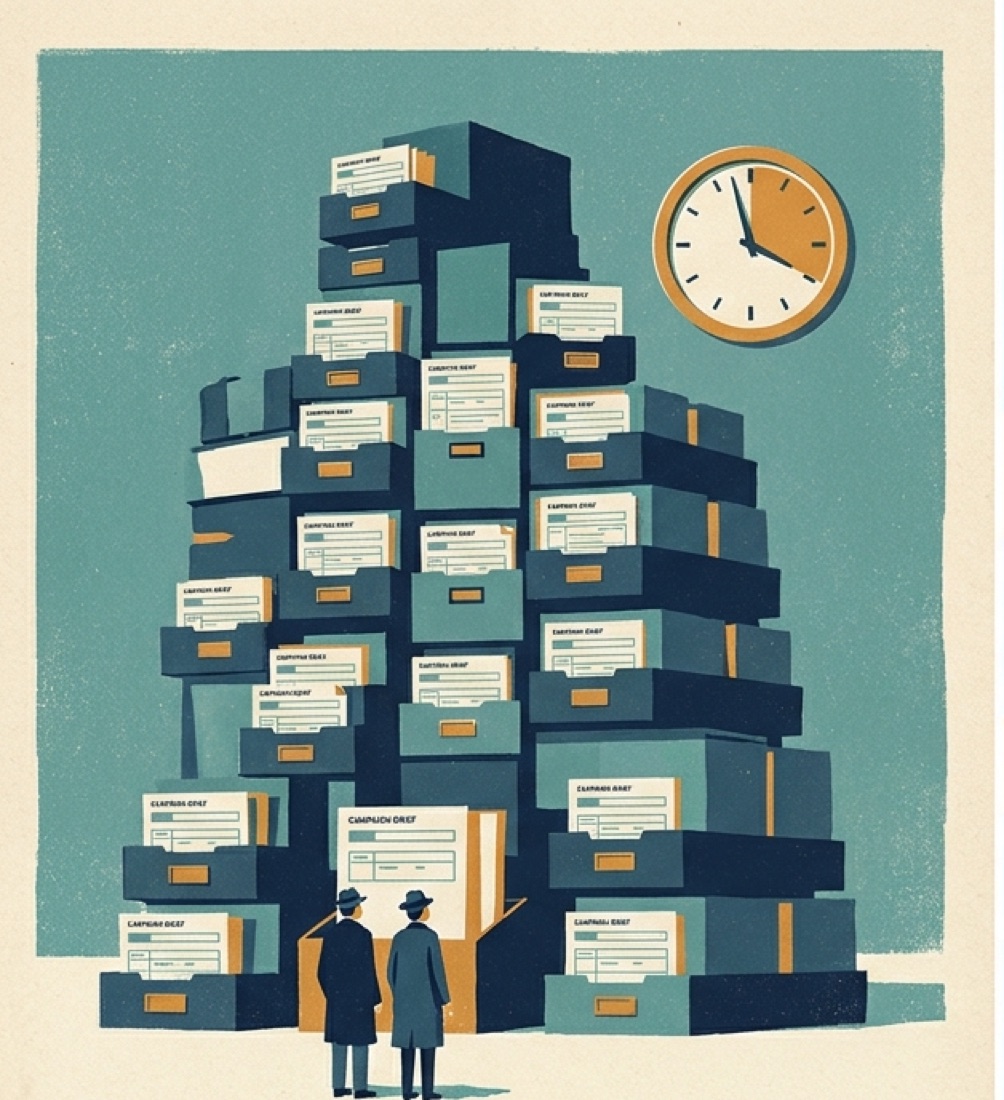
Now hand that team a tool that produces the draft in forty seconds. Cycle time goes from twenty days to seventeen. You optimized the one step that was never the problem, and you added a new one, because the reviewer now has to check every stat for whether the machine invented it. The editing tax. That is enhancement: the same work, done faster. A quicker machine in the same corner of the same factory. What actually moves the twenty days is redesign, which is the work changing shape, and nothing in a tool purchase gets you there. It gets paid by your most senior people, which is the worst possible place to put new work.
There are two more things happening at the same time, and neither one shows up in a tool usage report.
The first is your brand voice. When six people each have their own private prompt and their own way of asking, you don’t have a brand voice, you have six of them. Nobody notices in week one. By month six the newsletter doesn’t sound like the website, the website doesn’t sound like the sales deck, and nobody can point at the day it went wrong.
The second is the one nobody says out loud. Your team is already using AI. They’re just not telling you how much, because the honest version of the question they are being asked is "what will you do with the time you save," and they don’t like where that goes. That’s FOBO, fear of becoming obsolete, and it’s the real reason pilots stall. A team that’s afraid of the tool uses it privately and underreports it. You get all of the risk and none of the return, and your governance policy is a document nobody has read.
What you’re actually looking at
That’s Shadow AI. It isn’t a hypothetical. It’s running in your department this week.
The sentence that is costing you the year
The one I hear most often is "we need to get our marketing team using AI."
That sentence is the problem. Usage is already near total. It’s just invisible, unmanaged, and pointed at the wrong step. Setting a usage goal on top of that gets you more of the same, faster, with better reporting on it.
There’s a second thing making the timing worse. The demand side is moving underneath the department at exactly the same moment. Buyers are getting more of their answers from AI systems before they ever land on your site, and they arrive later and better informed than they did three years ago. So marketing teams are being asked to use AI to mass-produce more of the exact asset class that AI search is quietly compressing the value of.
Producing more of the thing that works less. That’s the trap, and volume is what walks you into it.
The work is not getting your team to use AI. The work is redesigning the four or five workflows that actually move revenue, and putting AI inside them at the step where it belongs.
That’s a behaviour change, not a technology change. Which is why it doesn’t happen on its own, and why the tools vendor can’t sell it to you.
The method, written out so you could run it yourself
- Map the work as it actually runs.
Not the process document. The real thing, with timestamps. Where does the work wait, and who is it waiting on. In most marketing departments the waiting is sixty to seventy percent of the calendar, and no one has ever measured it because everyone is measured on output instead.
- Start at the workflow closest to revenue.
Not the easiest one. The one where a week of delay costs money you can name. Usually that’s campaign brief to launch, or the pipeline of work that feeds sales directly. Teams almost always want to start with something safe, like social scheduling. Safe workflows produce safe results and nobody defends the budget in quarter two.
- Set the brand guardrails before you add any volume.
A written voice specification, a claim library of what you’re allowed to say and what you have evidence for, and a defined review gate that stays human on purpose. Do this first. Volume on top of undefined voice is how brands drift, and drift is expensive to reverse.
- Redesign the workflow, then put the tool into it.
In that order. Every failed marketing AI project I have seen did it the other way around.
- Train the people who will still be there after we leave.
Two to ten AI Champions, drawn from the people who actually do the work. Not executives. Executives sponsor this. They do not run it.
- Measure the thing your CFO cares about.
Not hours saved. Hours saved is a number nobody can spend. We define an AI Dividend with you at the start: what you call it, how it gets measured, and what we’re committing to work toward. For a marketing department that’s usually pipeline contribution, cycle time against a revenue-linked deadline, or cost per qualified opportunity. You pick it. We track it in front of your exec team every month.
- Keep a backlog so it doesn’t end when we do.
A live, ranked list of workflows still worth redesigning, owned internally, so the next one starts without us.
One workflow, three ways
Take campaign brief to first draft, because every marketing team has it and every marketing team's version is broken in about the same way.
Strategy lead opens a document. Waits on product and sales for input, six to nine days. Writer picks it up, goes hunting for the positioning, the last campaign's results and what legal said about that one claim in the spring. Writes, two or three days. Review: brand, claims, exec. Eight days. Ship.
≈ 20 daysThe writer generates the draft in forty seconds. Everyone reports a win. Nothing changed.
≈ 17 daysThe brief becomes structured input rather than a blank document, so the waiting has a form to fill instead of a meeting to schedule. Your positioning, your claim library, your voice specification and the results of the last three campaigns sit behind it as retrieval, so the context stops being a scavenger hunt. The first draft gets generated at brief approval, which means the writer opens an argued draft instead of an empty page, and spends their time on the argument instead of the assembly. Review compresses, because claims arrive pre-checked against the library instead of getting caught in round three. The exec gate stays human, deliberately, because that’s a judgment call and you shouldn’t automate judgment calls.
Under a week, and the reviewer's job got easier instead of harderThat’s the entire trick. There’s nothing proprietary in it.
The reason most teams don’t do it themselves isn’t that it’s secret. It’s that it needs someone to sit with the department for three months and hold the line in week five, when the novelty is gone, the old process is still sitting there working well enough, and everybody is busy. That’s the part that’s hard, and it’s the part we’re actually selling.
Want to know where your twenty days actually go?
Send me your process
What clients say after
"In just 12 weeks, we went from barely understanding AI to leveraging it for real-world impact."John Finan, President, Finan Home Service
"That... was... Awesome! The team all left full of ideas and excitement for our next steps."Mike Nunn, COO, Fastik
"A clear, grounded strategy to take real control of my company's future. What used to feel like chaos now feels like a strategic advantage."Ted Fox, Owner, Fox & Sons
The NoW of Work has been doing organizational transformation since 2016, on the back of twenty years before that. Cedarglen Homes, Discovery Co-op, Heart & Stroke, National Bank, Providence Healthcare, MacKay CEO Forums, Nootka Marine Adventures.
Who this is not for
- A two-person marketing team. There isn’t enough workflow to redesign, and you’d be better served by AI Quick Start or a few hours of coaching.
- A room where nobody carries a revenue number. The whole method is anchored to revenue-linked work. Without that anchor it turns into a training program, and there are cheaper ways to buy training.
- Anyone who wants us to run their marketing. We’re not an agency. We leave, and the point is that the department is stronger when we do.
- A team with no capacity at all. Three months of redesign takes real hours from real people. If every person in the department is at a hundred percent this quarter, start next quarter and mean it.
The program
Content, campaigns, research and reporting, redesigned into one system that your own people run.
- Audit of the workflows as they actually run, with timing
- Brand voice guardrails and claim library, built before volume
- Tooling set up inside the redesigned workflow, not alongside it
- Training for the team, and 2–10 internal AI Champions who own it after
- Pilot campaigns against redesigned workflows
- A live AI backlog, ranked, owned internally
- Monthly executive reporting
- An AI Dividend defined with you and tracked against revenue
Our commitment: measurable impact within 90 days. Steady momentum every month after.
Before you book anything, let me show you where AI fits.
Write out how a campaign gets from brief to launch at your company. Rough is fine. Who touches it, in what order, and roughly how long each step sits.
I’ll send back a proposal for your marketing function: which steps AI should take over, which ones it has no business touching, what changes for the people doing the work, and what I would expect it to be worth. No deck. If there’s nothing worth doing, I’ll tell you that too.
Ashleah Wilson · Partner, The NoW of Work
ai@nowofwork.com